


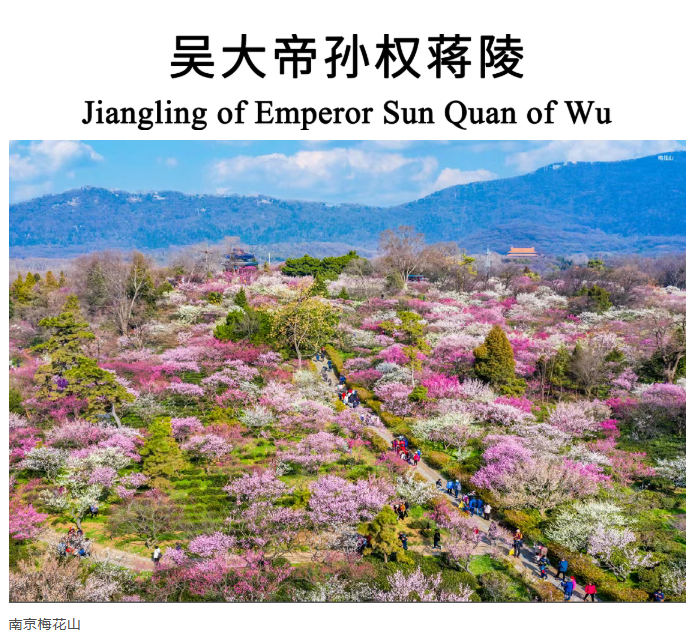
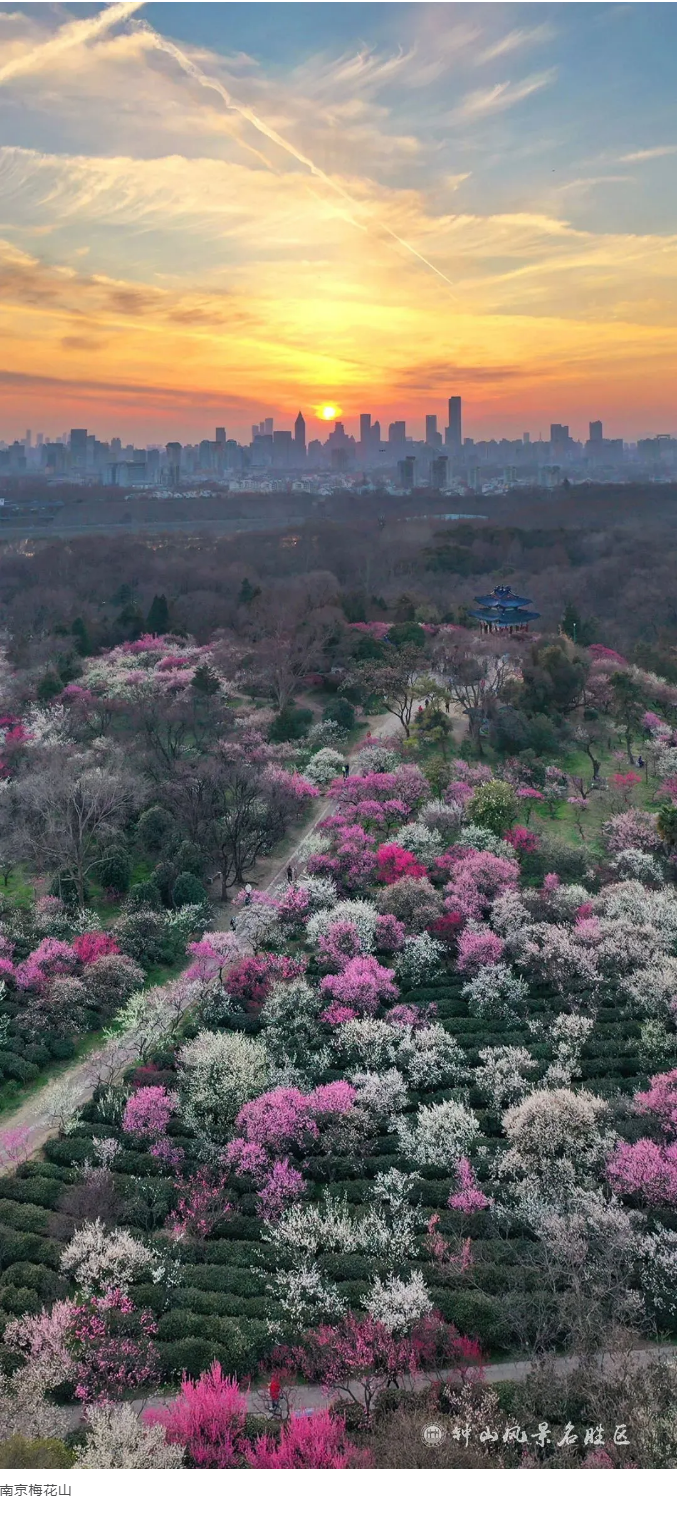
每年冬春,梅花盛放,位于明孝陵景区内的南京梅花山总是游人如织。
Every winter and spring, when plum blossoms come into full bloom, Meihua Mountain inside the Ming Tomb Scenic Area draws crowds of visitors.
在“天下第一梅山”的繁花之下,一代雄主孙权就埋葬在这里。史料记载,“吴大帝陵,蒋山阳,去城一十五里。”
Beneath the flowers of what is often called the “finest plum blossom mountain in China” lies a lesser-known chapter of history: the burial place of Sun Quan, the founding ruler of the Eastern Wu state during the Three Kingdoms period (220-280). Historical records note that“the tomb of the Emperor of Wu lies on the southern slope of the Purple Mountain, 15 li (7,500 meters) from the city.”
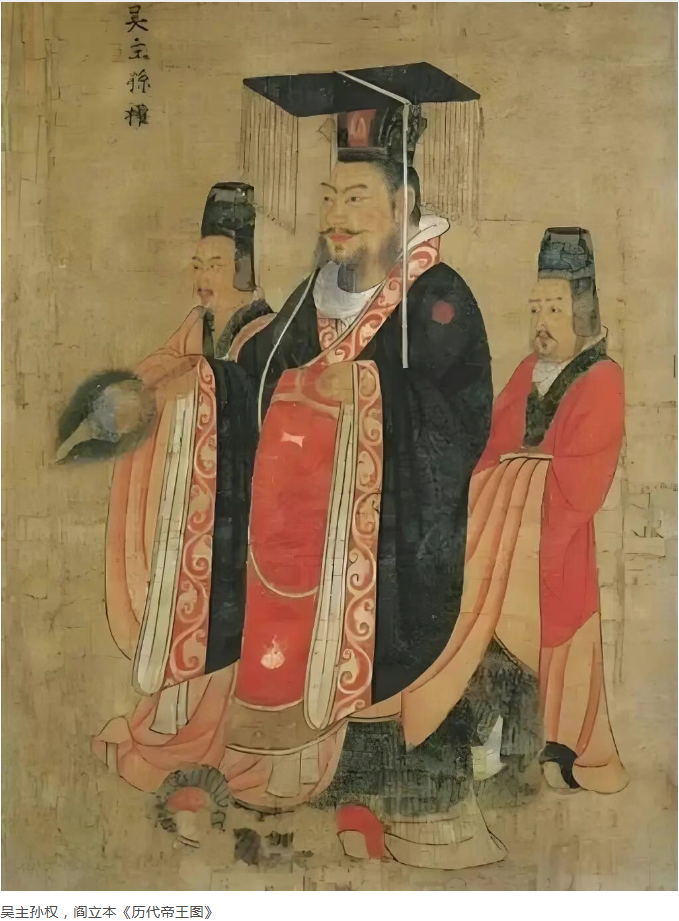
孙权,字仲谋,吴郡富春(今浙江富阳)人,三国时期孙吴的开国皇帝,在位二十四年,谥号大皇帝,庙号太祖,葬于蒋陵。
Sun Quan, courtesy name Zhongmou, was born in present-day Fuyang, Zhejiang. As the founding emperor of Eastern Wu, he ruled for 24 years and was later honored with the title Emperor Da of Wu and the temple name Taizu. He was buried at Jiangling.
尽管史书明确记载了蒋陵位于南京梅花山,但具体位置至今未明。
Although historical texts clearly place Jiangling at today’s Meihua Mountain in Nanjing, the tomb’s exact location has never been confirmed.
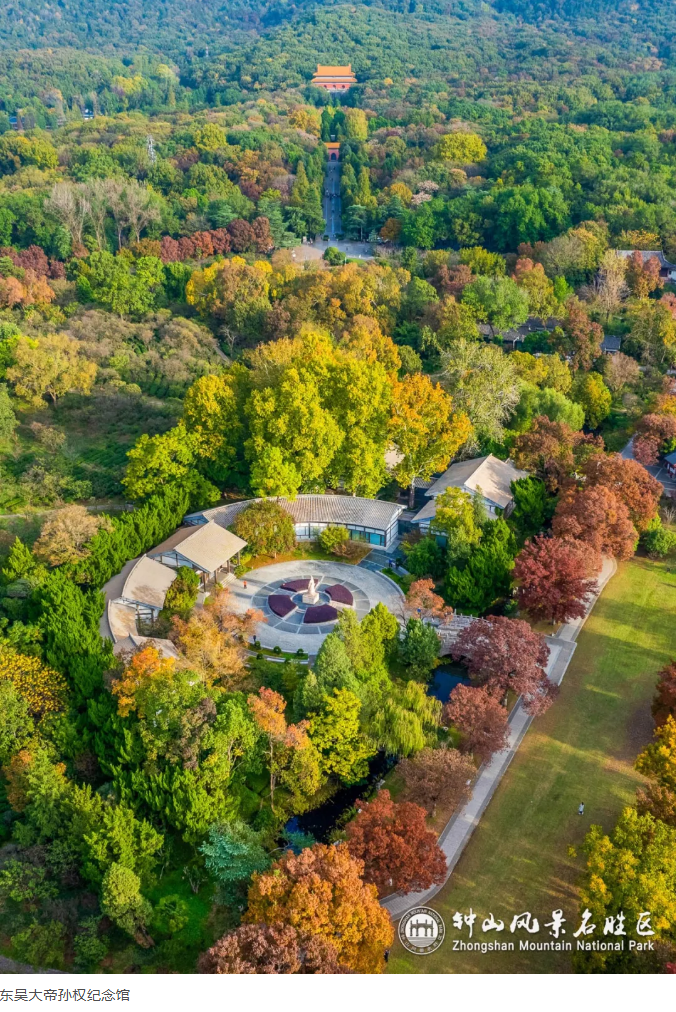
梅花山过去叫孙陵岗,又名吴王坟。孙权蒋陵是南京地区年代最早的一座帝王陵墓,然而墓葬的具体位置、建造规模、地面建筑、地下陵寝等均未见明确记载。赤乌元年(238年)孙权追封步夫人为皇后,孙权去世后与步夫人合葬在一起,称步夫人墩。
The area was once known as Sunling Ridge and also called the Tomb of the King of Wu. As the earliest imperial tomb in the Nanjing region, Jiangling remains something of a mystery: no detailed records survive describing its size, layout, above-ground structures, or underground chambers. In 238, Sun Quan posthumously elevated Lady Bu to empress. After his death, the couple were buried together, and the site became known locally as Lady Bu’s Mound.
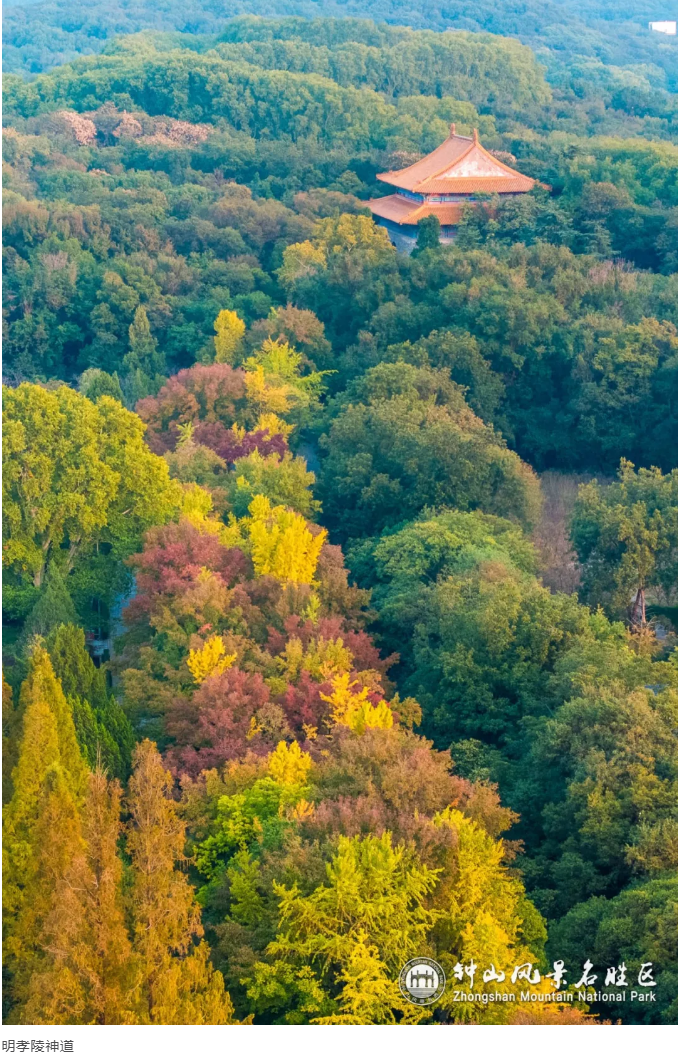
相传明太祖朱元璋营建孝陵时,有筑陵者建议将其平掉,而朱元璋认为孙权也不失为一条好汉,便将其陵留下为自己“守门”,从而造就了明孝陵神道绕梅花山而行的弯折之景。
According to legend, when the Ming dynasty (1368-1644) founder Zhu Yuanzhang was building the Xiaoling Mausoleum, some suggested leveling the site. Zhu is said to have replied that Sun Quan was a hero in his own right and decided to preserve the tomb, allowing it to “guard the entrance.” This choice is believed to explain why the Sacred Road of the Xiaoling Mausoleum curves around Meihua Mountain instead of running straight.
2011年,考古界对南京梅花山区域历史文化资源进行了联合勘探调查,对该区域地下历史遗存和地层结构做了全面了解。结果发现,在“博爱阁”南侧附近有巨大地下构筑物,呈“甲”字形状分布,且墓道之门可能向西。
In 2011, archaeologists carried out a joint survey of the Meihua Mountain area to study its underground remains.?Near the southern side of Boai Pavilion, they identified a large underground structure arranged in a shape resembling the Chinese character jia (甲), with a possible west-facing passageway.
专家们初步推测,这一构筑物有可能与孙权陵墓有关。然而,由于缺乏具体的发掘和进一步的证据,孙权墓的准确位置至今仍无法判断。
Experts suggested it may be connected to Sun Quan’s tomb, but without formal excavation or definitive evidence, its exact nature remains uncertain.?
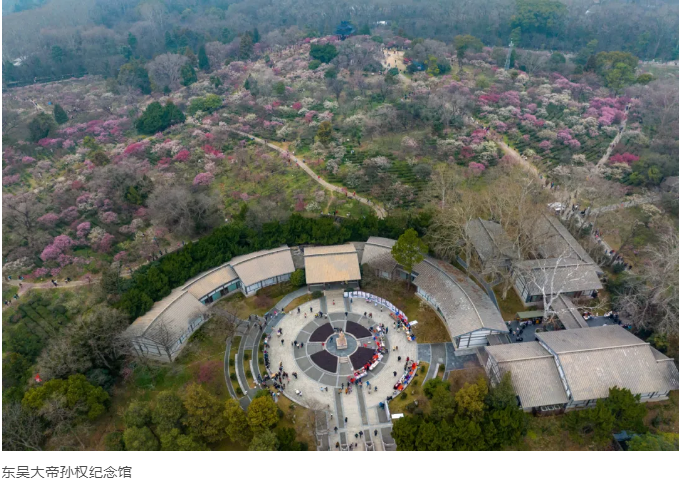
2012年,孙权纪念馆建成开放,全方位展示吴大帝纵横驰骋的一生,是景区展示六朝文化的重要一环。
The Sun Quan Memorial opened in 2012, offering visitors a comprehensive look at the life and legacy of the Emperor of Wu. It has since become an important window into Nanjing’s Six Dynasties history.
1982年孙权墓被公布为第一批南京市文物保护单位。2023年公布南京市第五批文物保护单位时调整其名称为:吴大帝孙权蒋陵。
Sun Quan’s tomb was first listed as a Nanjing municipal cultural heritage site in 1982. In 2023, its official name was updated to Jiangling of Emperor Sun Quan of Wu.
文保名称 Name:
吴大帝孙权蒋陵
Jiangling of Emperor Sun Quan of Wu
保护级别 Protection Status:
南京市文物保护单位(第一批)
Nanjing Municipal Protected Cultural Relic Unit (first batch)
年代 Period:
东吴Eastern Wu (Three Kingdoms period)
类别 Category:
古墓葬 Ancient Tomb
地理位置 Location:
明孝陵景区内梅花山
Meihua Mountain, Ming Tomb Scenic Area, Nanjing
核心价值 Significance:
南京地区年代最早的一座帝王陵墓
The earliest imperial tomb in the Nanjing region